
Is mortgage broking a good career? If you have an eye for detail and a keen interest in real estate, a career in mortgage broking could be your ideal job. As a mortgage broker, you can help people purchasing property to find the right mortgage for their circumstances. You also work with mortgage lenders to negotiate the best deals for your clients.
Sound interesting? Let’s look more closely at what mortgage brokers do; then we’ll answer the burning question – How much does a mortgage broker earn per loan? And finally, we’ll discuss the finance and mortgage broker course you’ll need to complete to work in this rewarding profession.
What do mortgage brokers do?
Mortgage brokers are in the business of negotiating the best loan for property owners, who are their clients. Qualified brokers use their in-depth knowledge of the mortgage industry to pick and choose from thousands of loans products on offer from over 30 Australian lenders. The broker’s experience and expertise will help them find the loan product that best suits the unique circumstance of each individual customer.
What are the main types of lenders, and what are they responsible for?
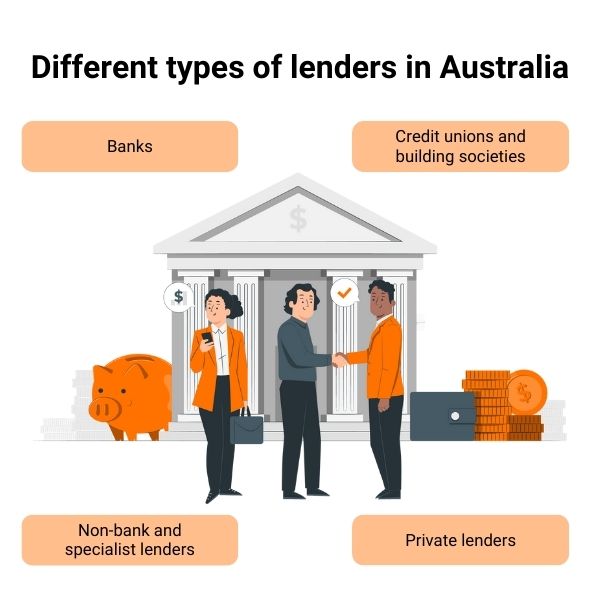
In Australia there are a few different types of lenders. For example:
- Banks: Traditional banks will offer a wide range of loan options and services and are predominately the most commonly used type of lender.
- Credit unions and building societies : These are generally member owned financial institution and can offer competitive rates and in some cases more personalised services.
- Non-bank and specialist lenders: These are generally independent lending institutions and are commonly used in today’s lending environment. They are known for out of the box style lending and tailored products.
- Private lenders: This can be a group of individuals that offer loans, these are generally used when traditional lenders are not an option for the client.
As a mortgage broker you will compare the offerings across all lenders and provide your client with options that best suit their scenario.
Who pays the mortgage broker, and how much do mortgage brokers earn per loan?
The good news for home buyers is that they aren’t usually paying the mortgage broker’s fee themselves. Instead, the broker is paid a commission by the bank or financial institution that provides the home loan.
Here’s how it works:
Mortgage brokers receive what is called an ‘upfront commission’, and this is paid by the lender after the loan has settled. Upfront commission can range anywhere from 0.5% to 0.7% of the loan value, plus GST.
Let’s break down this example: how much does a mortgage broker earn per loan of $1,000,000? If the commission on the home loan is set at 0.7%, the mortgage brokers commission would be $7,000 plus GST.
The next type of payment is known as a ‘trail commission.’ These are smaller payments that normally range between 0.165% to 0.275% of the loan value.
Trail commissions are calculated as a percentage of the mortgage principal through the life of the loan.
In 2017, the Royal Banking Commission recommended abolishing trail commissions for mortgage brokers. But the Morrison government declined to implement this recommendation, and the Albanese Government’s position is still unclear. At present, mortgage brokers continue to receive trail commissions on the home loans they negotiate.
So, is mortgage broking a good, lucrative career? A major factor you may want to consider is: “how much does a mortgage broker earn per loan?”. As we can see, mortgage broking can be a lucrative profession. If you build a solid client base and a good reputation, you can create an exciting and rewarding career.
So how do I become a mortgage broker?
The minimum education requirement for a mortgage broker is a Certificate IV in Finance and Mortgage Broking.
Entry Education’s Certificate IV in Finance and Mortgage Broking course is the perfect place to start a stellar career in home loan finance. Entry is a Registered Training Organisation (RTO 41529), which means that our finance and mortgage broker course fully complies with ASQA standards, requirements, and industry best practice. This course will teach you everything you need to know about credit applications and loan processing procedures. You’ll also acquire knowledge of the relevant legislation to ensure that your work meets all legal requirements.
The Certificate IV in Finance and Mortgage Broking (FNS40821) course requires the completion of seven core units and five electives for a total of 12 study units.
The seven core units of the Certificate IV in Finance and Mortgage Broking (FNS40821) course are:
- FNSFMB412 – Identify client needs and present broking options
- FNSINC412 – Apply and maintain knowledge of financial products and services
- BSBPEF501 – Manage personal and professional development
- FNSCUS511 – Develop and maintain professional relationships in financial services industry
- FNSINC411 – Conduct work according to professional practices in the financial services industry
- FNSFMK515 – Comply with financial services regulation and industry codes of practice
- FNSFMB411 – Prepare loan applications on behalf of clients
In addition, Entry Education has selected the following electives that cover the topics you’ll find most useful in your mortgage broking career:
- BSBTEC301 – Design and produce business documents
- FNSASIC311 – Establish client relationship and analyse needs
- BSBOPS304 – Deliver and monitor a service to customers
- BSBPEF402 – Develop personal work priorities
- FNSSAM421 – Provide information on financial products and services to clients
Once you’ve earned your Certificate IV in Finance and Mortgage Broking, you can apply to be an authorised representative via an aggregator who will hold an Australian Credit Licence and commence your new career!
Find out more about how to become a mortgage broker here.
So, where do I start?
Entry Education’s Finance and Mortgage Broker course has no formal educational requirement for registration, although you’ll need to pass a basic English language, literacy, and numeracy quiz before starting your study program.
As this is primarily an online course, you’ll also need a computer and reliable internet. You will work through the course requirements in your own time and at your own pace. If you prefer personalised instruction, we hold face-to-face study sessions at our South Melbourne classroom or through Microsoft Teams video-conferencing workshops.
The fast track
If you want to get a head-start and turbocharge your way through our finance and mortgage broker course, you should attend Entry Education’s face-to-face workshops. In these workshops, you’ll learn from industry professionals who bring years of hands-on experience to the classroom.
In Entry Education’s workshop setting, you should be able complete the Certificate IV in Finance and Mortgage Broking course in around two to three days. Earning a Diploma in Finance and Mortgage Broking Management should take around four days.
You’ll come away from Entry Education’s workshops with just the right mix of theory, industry case studies and practical skills. These will give you a competitive advantage both in getting that first job and throughout your career.

The Entry difference
At Entry Education, we measure our success by your success. You’re more than a graduate; you’re a member of the Entry alumni. That means we’re behind you, applauding your career milestones and celebrating your successes.
When studying with Entry, you have after-hours access to our legendary support network throughout your course.
Have a question beyond how much mortgage brokers earn? The answer is just a click away with our interactive student portal.
If you’d like to listen to some of our past students talking about their experience at Entry Education, check out what these superstars have to say.
When you choose Entry Education’s finance and mortgage broker course, you’ll:
- have access to your personal online tutor throughout your course
- receive marked assessments within two weeks, or within a single business day if urgent (fee applies)
- pay a flat fee with no extra charges or hidden costs.
We’ll email a PDF copy of your certificate of attainment and transcripts. This will enable you to apply to be an authorised representative with an aggregator.
In review: Is mortgage broking a good career? The answer is yes! And, how much does a mortgage broker earn per loan? We worked that out for you too – read above. Now you have all the information you need to take the first step towards your brilliant career as a mortgage broker!
If we can help further, phone us on 1300 799 447, or fill out the contact form on our website. We look forward to speaking with you soon!